Wood vs Aluminium Garden Furniture: Which is Better?
Pull up a chair, because the battle between wood and aluminium garden furniture is one worth sitting down for. The material you choose will shape not just the look of your outdoor space, but also how long the pieces last, and how much care they’ll need along the way. A classic staple, wooden furniture has always been loved for its warmth and natural texture, while aluminium has grown in popularity for its modern aesthetic and rust, rain and frost-resisting abilities, even in damp British gardens. As more homeowners look for durable outdoor furniture, comparing materials before investing is essential.
In this guide, we’ll put the options side by side. Read on to discover the pros and cons, learn which is the best material for garden furniture and see why Harbour’s aluminium collection is among the most popular choices for creating a beautiful outdoor space that lasts year after year.
What makes outdoor furniture durable?
Durability in garden furniture comes down to more than how strong it looks on day one. The real test is how well it stands up over time. While a bit of wear and tear is inevitable, truly durable outdoor furniture resists whatever the weather throws at it without warping, cracking or losing its finish. The British climate is famously unpredictable, so resistance to rust and rot matters just as much as comfort and style. A small city balcony might benefit from lightweight furniture that’s easy to move, while a large country garden could call for heavier pieces that stay put even in strong gales. How you use your garden furniture often decides how long it lasts. A dining table that sees daily meals through the summer will need tougher materials than a bench tucked away in a shaded corner. Aluminium holds up well to regular use without demanding much upkeep, while wood offers plenty of character but asks for a little more care in return. The time of year matters as much as daily use. Wood looks beautiful in spring and summer, especially when it blends with plants or climbing greenery. But once autumn storms and winter frosts arrive, aluminium proves the more reliable of the two, keeping its strength and finish with little upkeep.
Read our guide to find out more about the best garden furniture to leave outside.
Benefits of aluminium garden furniture

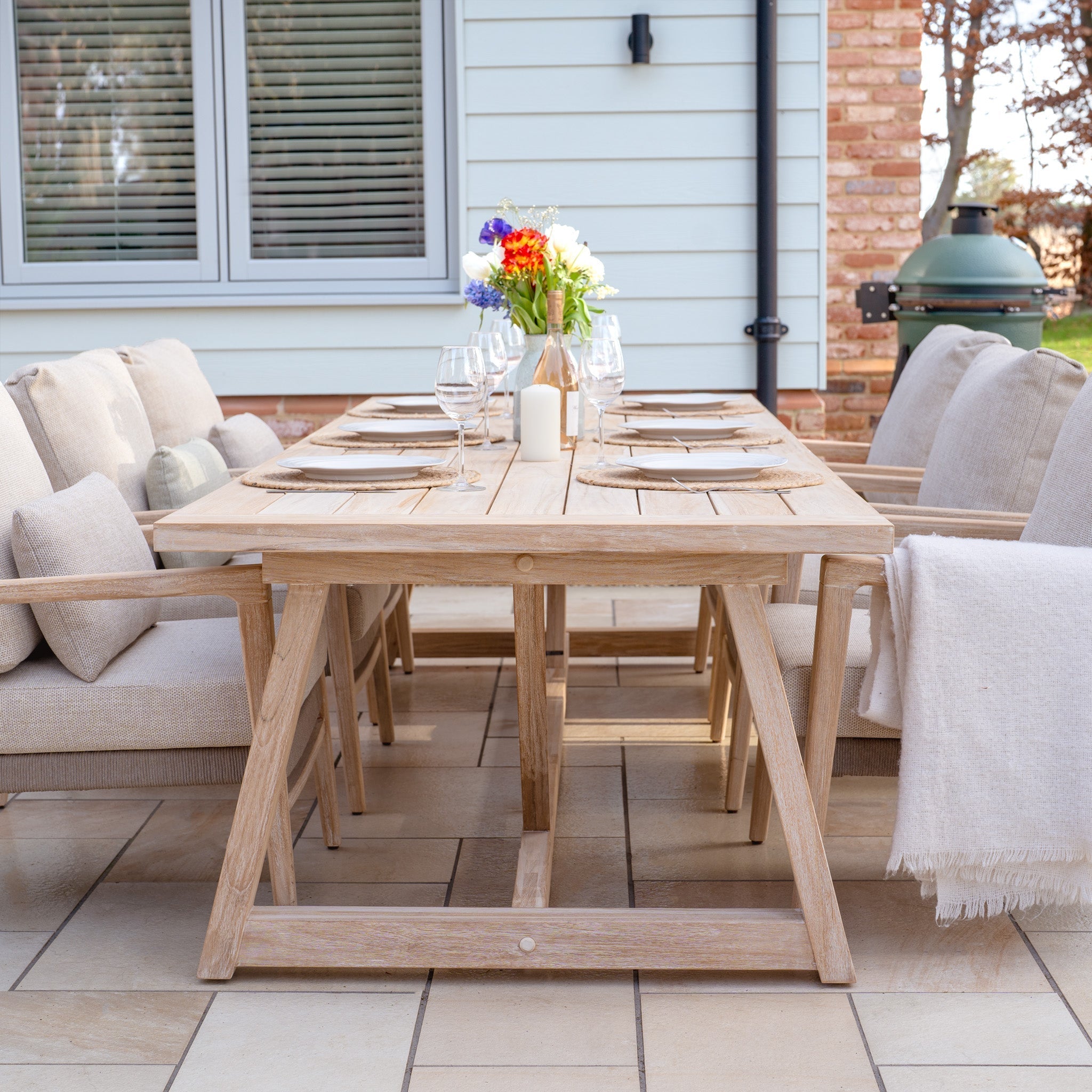
Dekota 8 Seat Rope Dining Set with Albatross Extending Table in Fawn – £3,999.00
Aluminium has become one of the most popular choices for modern gardens, offering a combination of style and practicality that’s hard to beat. Lightweight yet strong, it delivers the resilience you need to make outdoor living easy.
Key benefits include:
-
A modern aesthetic: Clean lines and contemporary finishes give aluminium furniture a polished feel. A good all-rounder, it works in both compact terraces and expansive patios, pairing beautifully with materials like decking or stone.
-
Weather resistance: Aluminium won’t rust or lose its structural integrity, even after years outdoors. Whether the garden faces heavy rain or sharp frosts, you can depend on the frames to stay strong and dependable.
-
Low maintenance: A quick wipe or rinse is usually all it takes to keep aluminium looking its best. Unlike wood, there’s no need for sealing or staining, which frees up more time for relaxing.
-
Long lifespan: With powder-coated finishes protecting the surface, aluminium furniture is designed to last for decades without losing its good looks.
-
Lightweight strength: Easy to move around yet sturdy once in place, aluminium is ideal for smaller gardens where layouts might change, as well as larger spaces that need flexible seating for entertaining.
Benefits of wooden garden furniture
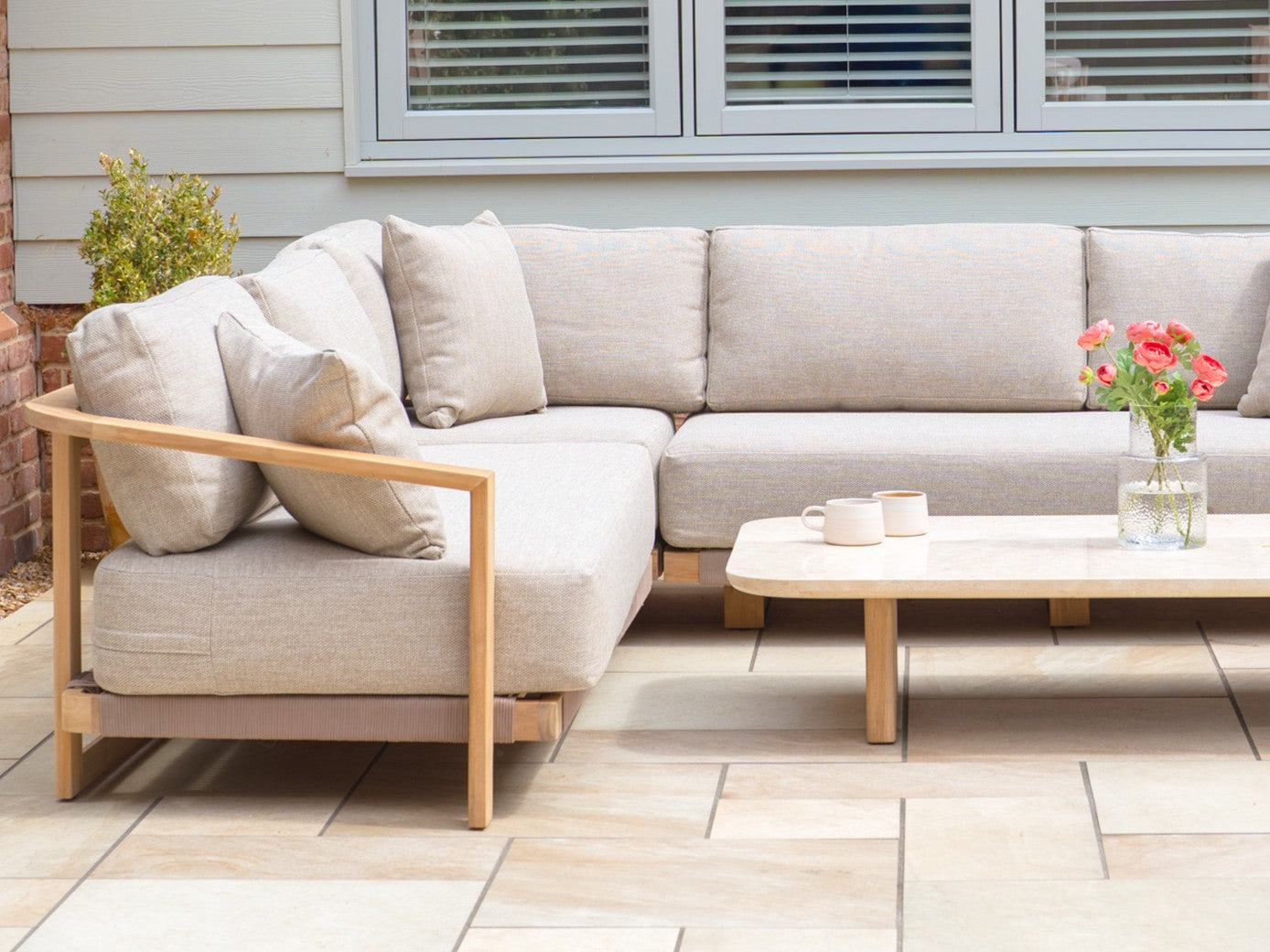
Tivoli Large Corner Set with Marble Coffee Table in Fawn – £5,249.00
Wooden furniture has a timeless appeal that gives outdoor spaces warmth and natural character. From rustic benches to classic dining sets, wood creates a connection between furniture and the garden itself, softening hard landscaping and merging with planting.
Key benefits include:
-
Natural charm: Wood has a warmth and texture that no other material can fully replicate. It feels organic in traditional gardens and develops extra character as it weathers over time.
-
Customisable style: Wood can be painted or stained to suit different tastes. From a soft, natural finish to bold, painted frames, wood gives you the freedom to refresh your look whenever you choose.
-
Sustainable sourcing: Responsibly harvested wood can be an environmentally friendly option. For eco-conscious homeowners, choosing FSC-certified wood means supporting more sustainable forestry practices.
-
A sturdy presence: Typically heavier than aluminium, wooden furniture stays grounded even in breezy conditions, making it a good match for larger gardens.
Aluminium vs wood: key features comparison
In this section, we’ll explore the strengths and trade-offs that come with aluminium and wooden garden furniture. Each material has its own merits, and we’ll break these down across four essential criteria: maintenance, durability, sustainability and value.
Aluminium vs wood garden furniture at a glance
|
Feature |
Aluminium furniture |
Wooden furniture |
|
Upkeep |
Wash down occasionally to remove dust or dirt |
Needs oiling, sealing or staining to prevent rot and fading |
|
Lifespan |
15 years or more with minimal care |
Teak can last decades, but softer woods decline faster |
|
Sustainability |
100% recyclable, long reuse cycle |
Renewable and biodegradable, with FSC-certified options available |
|
Value over time |
Higher initial cost, but low maintenance costs |
Lower starting cost, but frequent maintenance can add up |
|
Best fit |
Modern, coastal or low-maintenance gardens |
Rustic, traditional or plant-heavy spaces |
Aluminium vs wood: what is the best no-maintenance garden furniture?
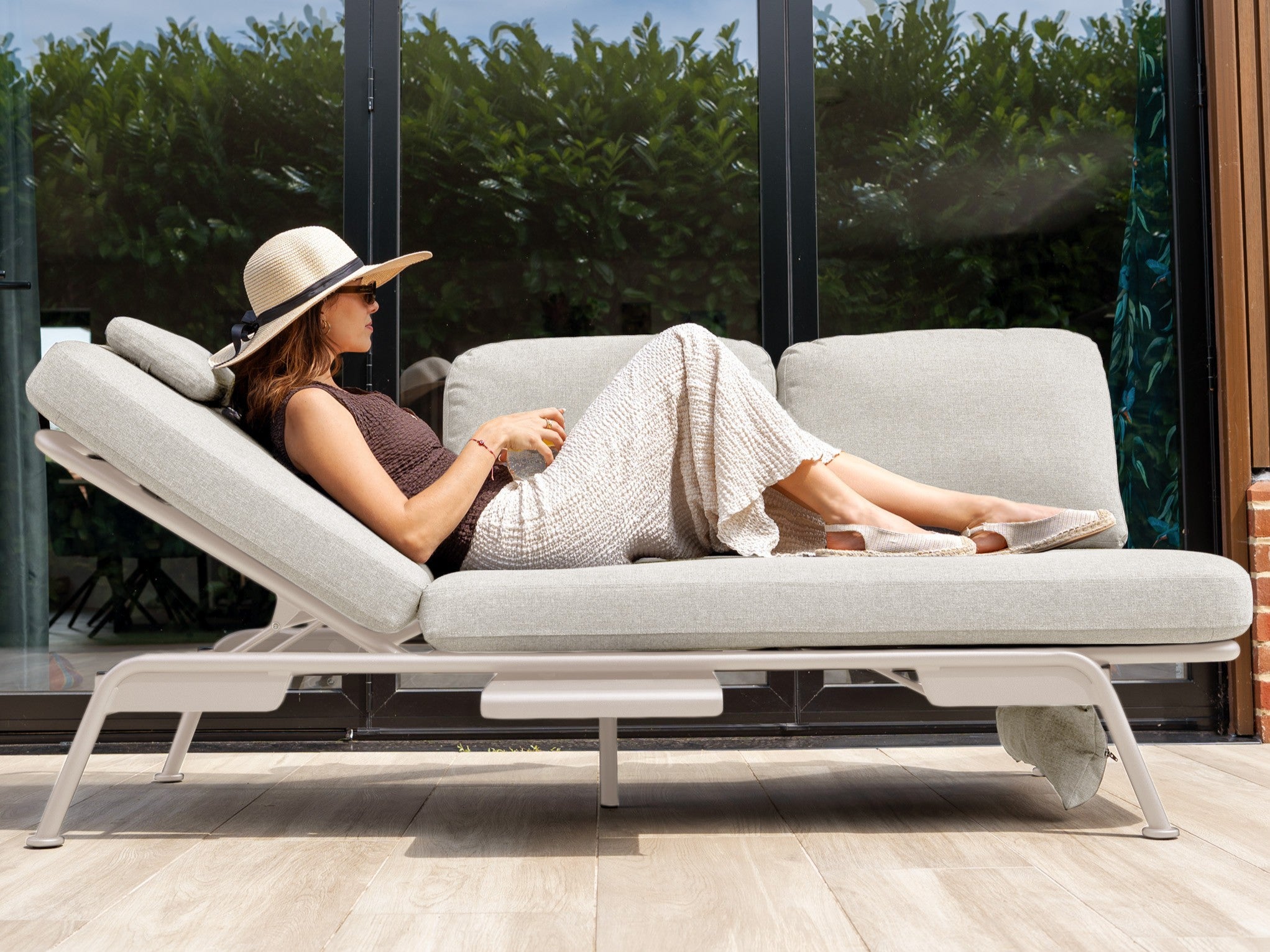
Needing only the occasional wash to stay looking fresh, aluminium is the clear winner for anyone who wants furniture that looks after itself, even in damp British weather. Wooden sets ask for more attention. Oiling, sealing or staining helps protect the grain, but it means extra time and ongoing costs if you want the furniture to last and look good.
Wood vs aluminium: what type of outdoor furniture is the most durable?
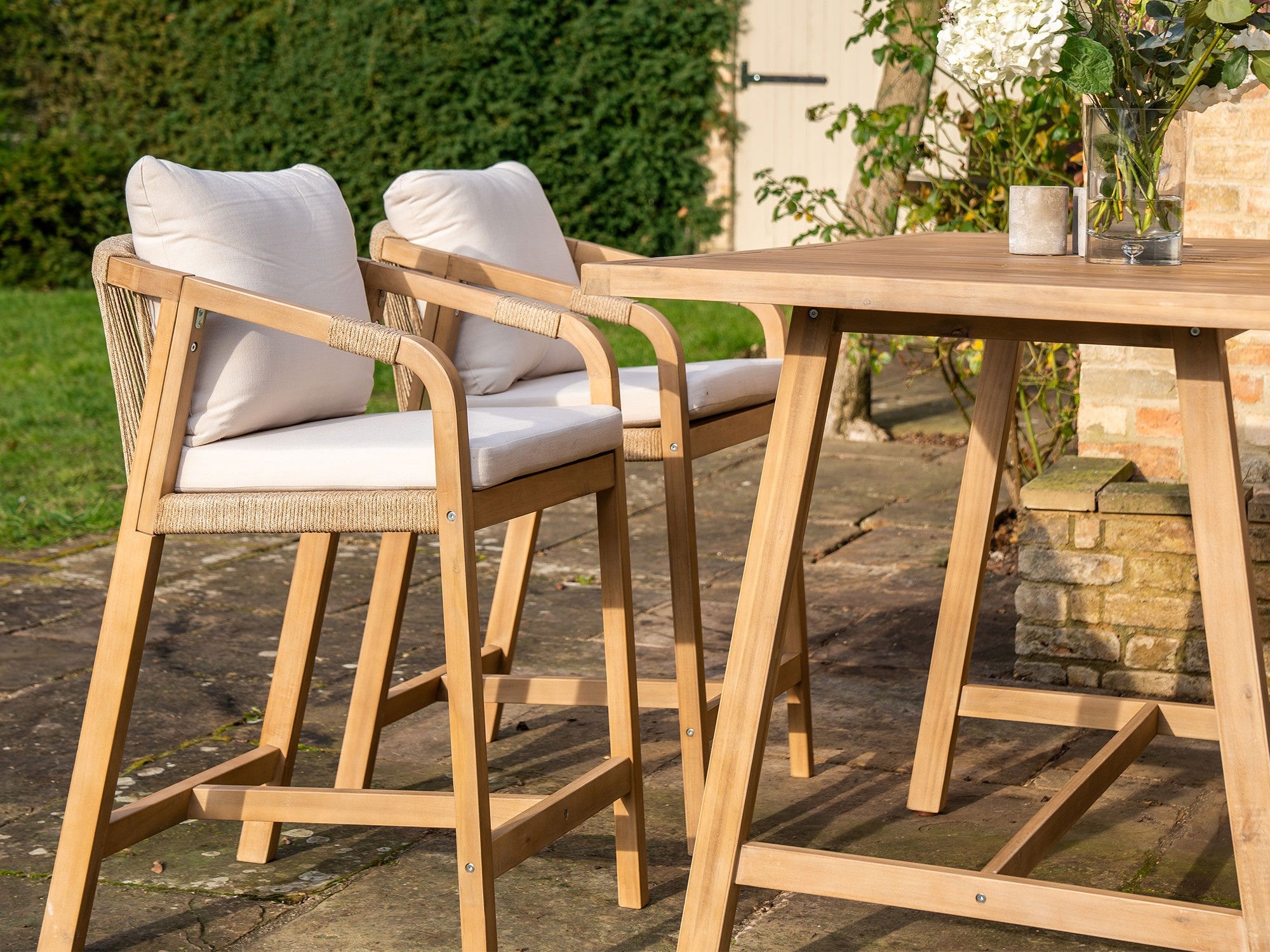
Quay 4 Seat Rectangular Bar Set In Linen – £699.00
Both materials can go the distance. Aluminium furniture typically lasts 15 years or more with very little effort, and powder-coated finishes help lock in colour and resist UV fading. Teak furniture, known for its strength and durability, can last decades when looked after correctly and even be passed down through families. However, softer woods like pine don’t hold up as well, with their absorbent nature often struggling in the damp and frosty conditions of a UK winter.
Environmental and sustainability considerations
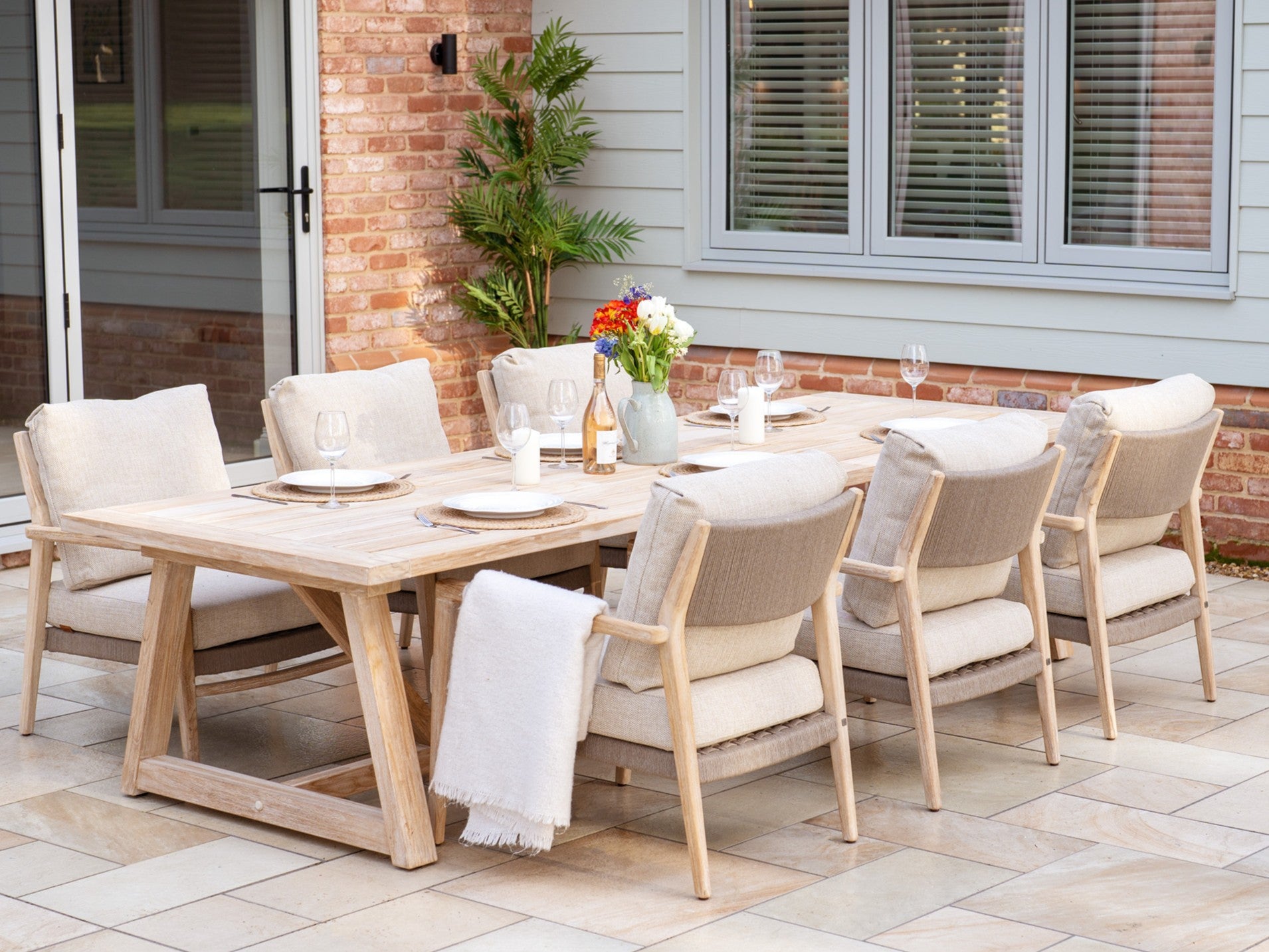
Noah 6 Seat Low Rectangular Dining Set in Volga Grey – £6,315.00
Responsibly sourced wood is renewable, biodegradable and absorbs carbon while it’s in use. Choosing FSC-certified timber is one way to make sure the wood comes from sustainable forestry. Aluminium has a heavier footprint during production, but it’s endlessly recyclable without losing quality. Around three-quarters of all aluminium ever made is still in circulation today, which makes it one of the most sustainable metals available.
Which material is better value for money: aluminium or wood?
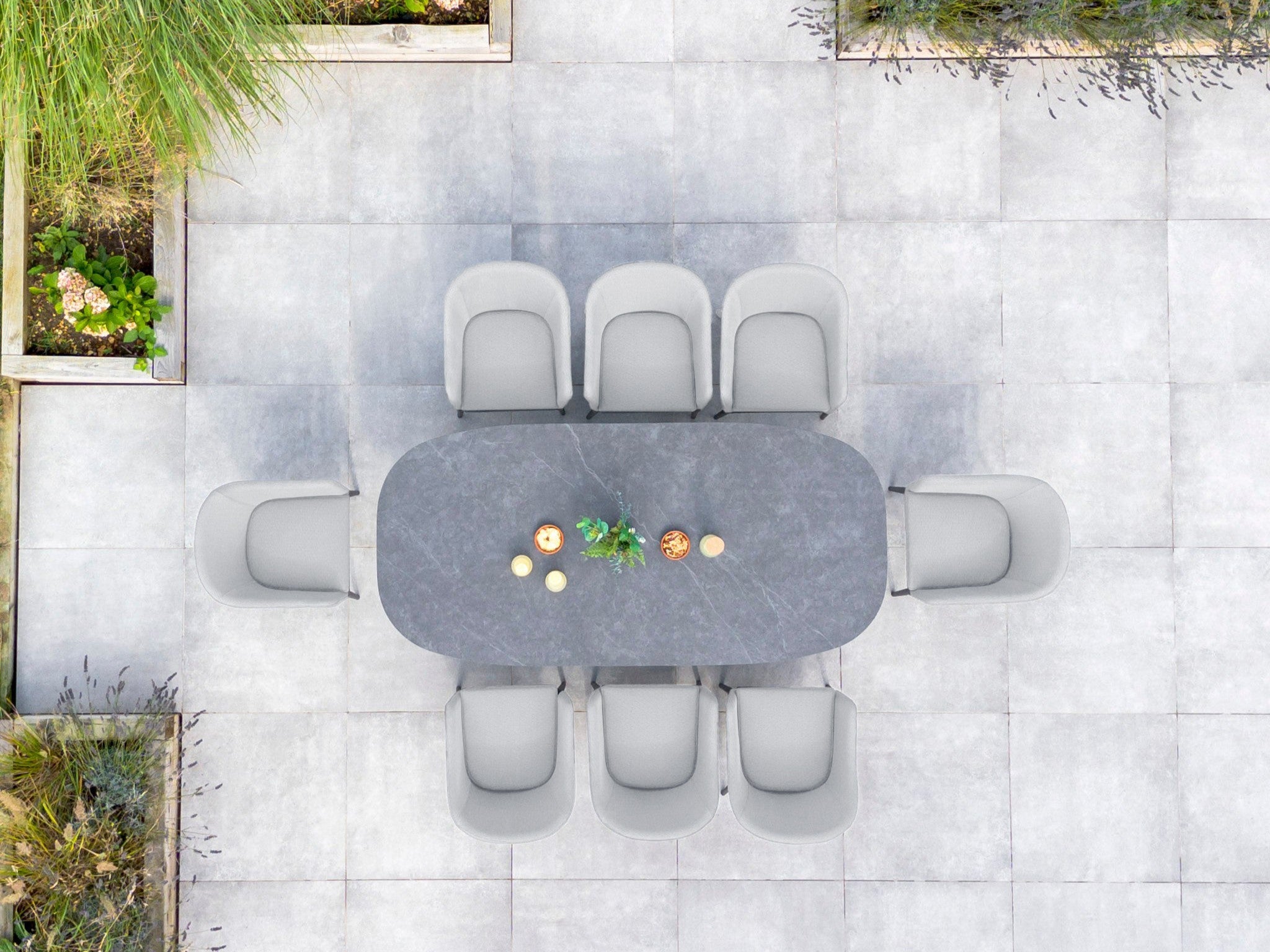
Luna 8 Seat Outdoor Fabric Oval Ceramic Dining Set in Oyster Grey – £1,999.00
At first glance, wood often seems cheaper, with entry-level sets starting at a few hundred pounds. The reality changes once you factor in maintenance products and the need for replacements sooner than expected. Aluminium usually costs more upfront, but its longer lifespan and low upkeep mean the total cost of ownership is often lower over time. In other words, aluminium feels like a bigger investment on day one, but it’s one that pays you back season after season.
Still undecided? Our guide on how to choose the best garden furniture for your home could help.
Choosing the best material for your garden furniture
Wood is a classic that provides natural texture and warmth, but it does need more upkeep to stay at its best. On the other end of the spectrum, sleek and stylish aluminium is low maintenance with the resilience needed for year-round British weather. As a result, it often stands out as the go-to choice for those who want the most durable outdoor furniture. At Harbour Lifestyle, our aluminium furniture is built to weather the seasons and elevate every moment spent outdoors. Powder-coated finishes and timeless designs make each durable outdoor furniture set a reliable companion for decades to come.
Explore our aluminium garden furniture collection and see how it can reshape your garden life.
FAQs
Which is better for garden furniture, wood or aluminium?
Aluminium offers the best all-round durability and lowest maintenance, while wood provides timeless warmth and natural character. Your choice depends on whether you prioritise easy care or organic texture.
Which garden furniture lasts longer in UK weather?
Powder-coated aluminium typically lasts 15+ years with minimal upkeep. Teak wood can outlast aluminium if regularly sealed and oiled, but softer woods weather and rot faster in damp conditions.
Is aluminium garden furniture really maintenance-free?
Almost. Aluminium only needs an occasional wash to stay clean and rust-free. Unlike wood, there’s no need for staining or sealing, making it ideal for busy households.
How do wood and aluminium compare for sustainability?
FSC-certified wood is renewable and biodegradable, while aluminium has a higher production footprint but is endlessly recyclable—around 75% of all aluminium ever made is still in use.
Which is better value for money over time?
Wood can be cheaper upfront, but ongoing treatments raise long-term costs. Aluminium costs more initially, yet saves money with its low maintenance and long lifespan.
Can wooden garden furniture handle winter outdoors?
Yes, but it needs seasonal care. Store cushions, cover the furniture, and treat the wood to protect against frost, rain and moisture damage.
Does aluminium garden furniture get hot in the sun?
Aluminium can warm slightly, but powder-coated finishes reflect heat and cool quickly. Pair with cushions or throws for extra comfort during summer.